How to Write Melodies Without Knowing Music Theory
Can you write melodies if you can’t read a single note of music?
You certainly can:
When I first sang my lyrics out loud, the tune that came out sounded like a nursery rhyme. Surprisingly, it suited the song really well.
So, if you can sing a nursery rhyme, you already know more about how to write melodies than you think.. Read your lyrics out loud, then try singing or humming them. Let the words rise and fall where the feelings do. Simple, rocking shapes like the songs you learned as a child are a great place to start.
Still stuck? Try one of these ways to write melodies:
- Borrow a melody to get started. Pick a song you love on YouTube and sing your lyrics to its tune. As you keep singing, change a note here and a rhythm there. Little by little, the melody will turn into your own. Just make sure the final version is clearly yours and not a copy of the original.
- Hum over chords. Use a free chord progression generator and loop a progression you like in the background. Hum along over the first line of your first verse until a tune appears, then fit your words to it.
- You might cringe at how you sound at first. Keep going, and let your inner voice take over. There’s music in all of us, and you’ll be surprised at what you can do.
From Your Voice to a Finished Song in Suno v6
Once you’ve learned to write melodies by singing and recorded yourself, upload the recording to Suno v6 and make a cover from it.
In Suno’s V6, you can control how much influence your own recording has on the result.
You can also create a persona, a voice you feel represents you, and use it across all your songs. That way, every release sounds like the same artist.
Who Owns the Song When You Write Melodies With AI?
A song has two separate copyrights:
- The song itself (the “composition”): your lyrics and melody. This is yours, and it’s the one that matters most.
- Each recording of the song (the “sound recording”): a specific performance captured on audio. Every recording is its own separate thing.
What that means for covers: when someone covers your song, they make a new recording. They own their recording, but you still own the song. They have to pay you songwriter royalties for using it, and the song always stays yours. That’s why writing the melody yourself matters so much: it makes the whole composition yours.
What that means for your own recordings:
- Your GarageBand recording of you singing is a human performance, so it’s protected as a sound recording.
- The Suno version sung by the AI persona has little or no copyright protection as a recording, because the performance was generated by AI. But that doesn’t touch your song: the lyrics and melody inside it are still protected.
- The persona’s voice itself can’t be copyrighted by anyone. Copyright never covers the sound of a voice, human or AI.
The bottom line for you: the thing you most care about, your song, is fully yours, no matter who sings it or how. What’s weaker is protection for the specific AI-sung audio file, which matters much less in practice.
If you record yourself singing and use AI to change the vocal sound while preserving your actual performance, the final recording can still qualify for U.S. copyright protection. If someone samples a passage containing your original, copyright-protected lyrics or melody, that use can infringe your rights—even when the surrounding production is AI-generated. A sample doesn’t become permissible simply because it is short or has been chopped up or altered. What matters is the protected expression being copied, its significance, and whether permission or a legal exception applies.
Don’t assume these examples establish copyright protection for your own song or recording. AI-assisted work is assessed case by case. Before relying on this information, contact the U.S. Copyright Office with questions about your specific process. Explain what you created yourself and what AI generated or altered, and ask for guidance on registering your human-created contributions.
Keep copies of your original vocal upload, Suno’s first cover, and the final version, along with dated lyric drafts. These help document your contribution and show which parts of your melody remain in the finished song.
How I Write Melodies: My Voice vs. AI
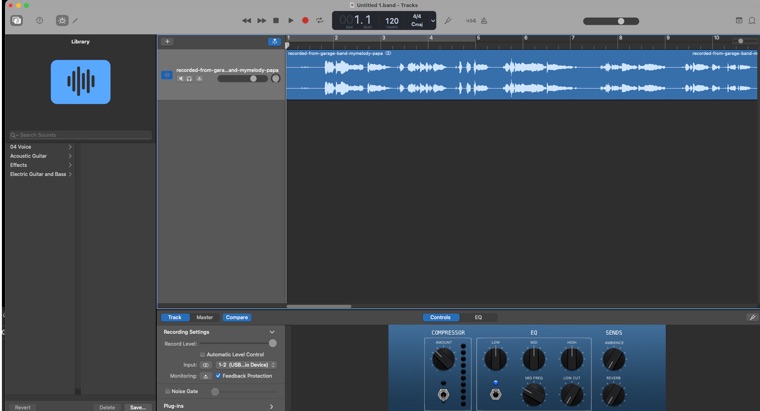
Here’s an example from my song “I Hate the Night.” First, you’ll hear me singing the melody I wrote into GarageBand. Then you’ll hear the same melody brought to life with AI.
Last year, I released the first version of “I Hate the Night” as a disco track. I wrote the lyrics, but the music was entirely AI-made. This time, the melody is one I sang myself. [Hear the original disco version here – /i-hate-the-night/]